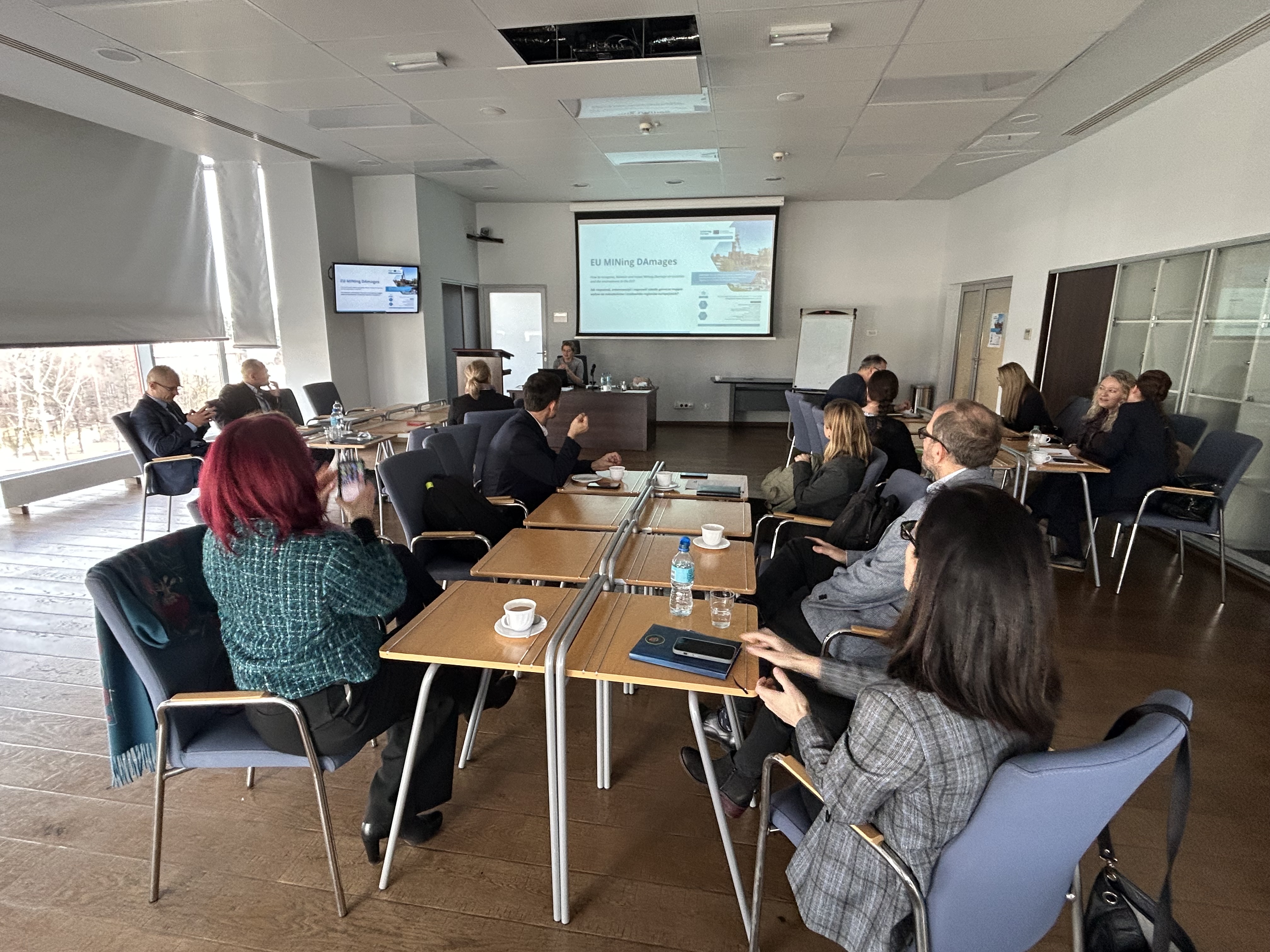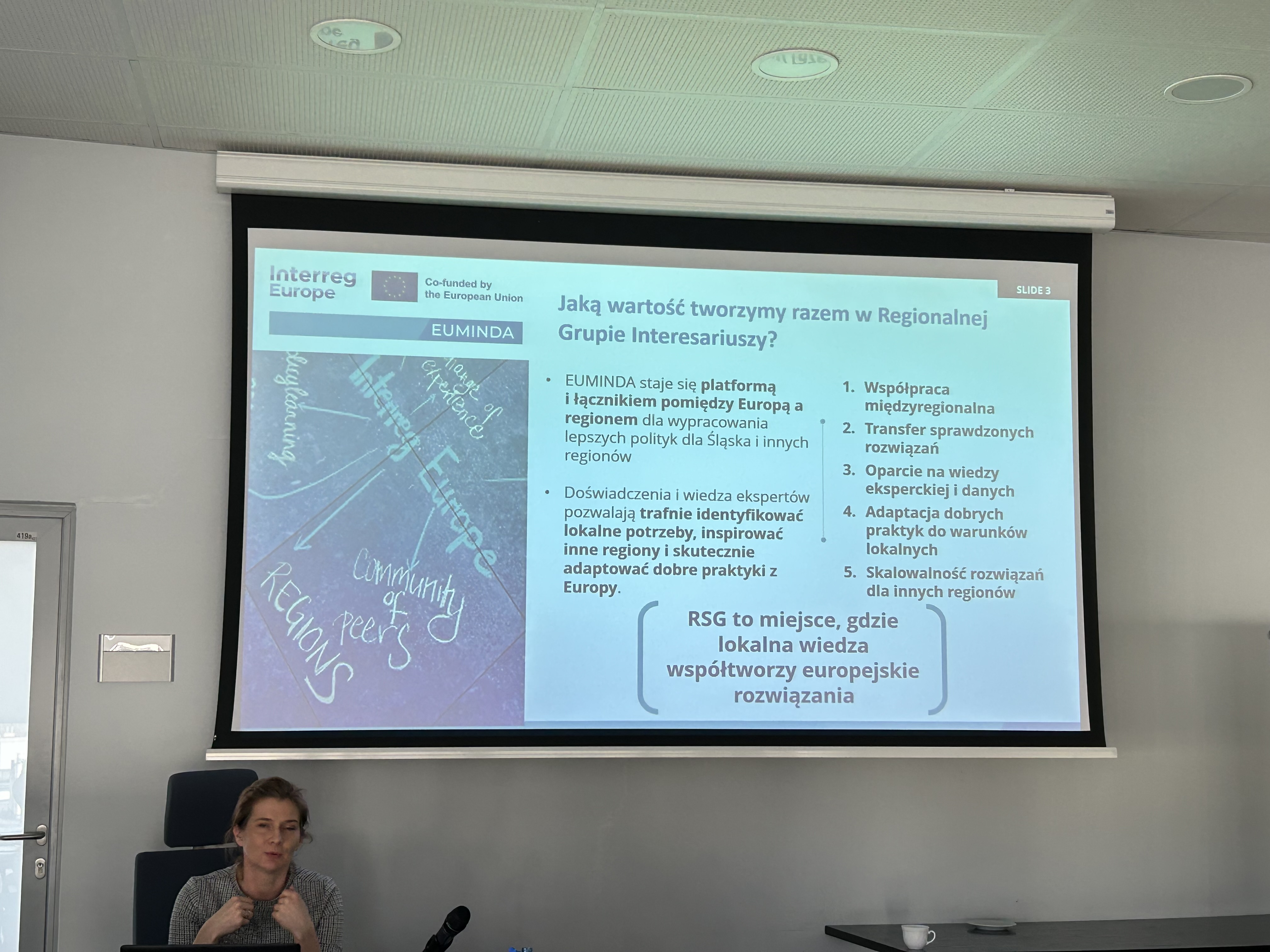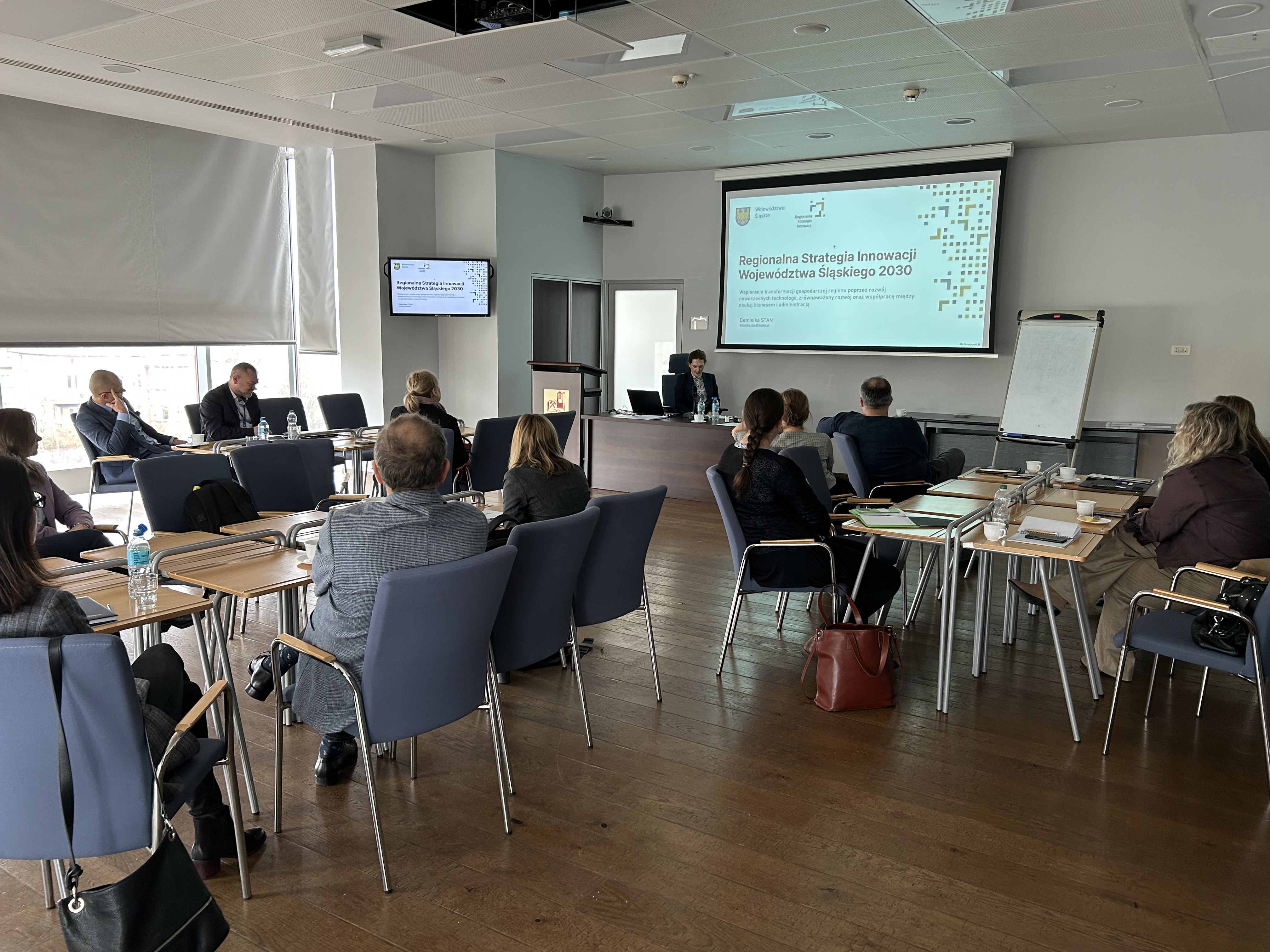
As part of the EUMINDA project, dedicated to the challenges of the just transition of post-mining regions and to addressing the long-term impacts of industrial activity on society, space, and the environment, the inaugural meeting of the Regional Stakeholder Group (RSG) was held at our Institute on 12 February 2026.
The meeting brought together experts representing regional and local authorities, research and cultural institutions, social partners, and specialists involved in the transformation of post-industrial areas. A total of 9 participants attended the meeting, while 19 representatives of institutions and organisations declared their willingness to engage in the future work of the RSG and contribute to subsequent project activities.
During the meeting, participants were introduced to the objectives of the EUMINDA project as well as the goals of the Regional Innovation Strategy of the Silesian Voivodeship (RSI 2030), analysed within the project as a key regional policy instrument. Together, the participants identified the main challenges related to the revitalisation of post-industrial areas, stakeholder expectations, existing development gaps, and directions for further project activities.
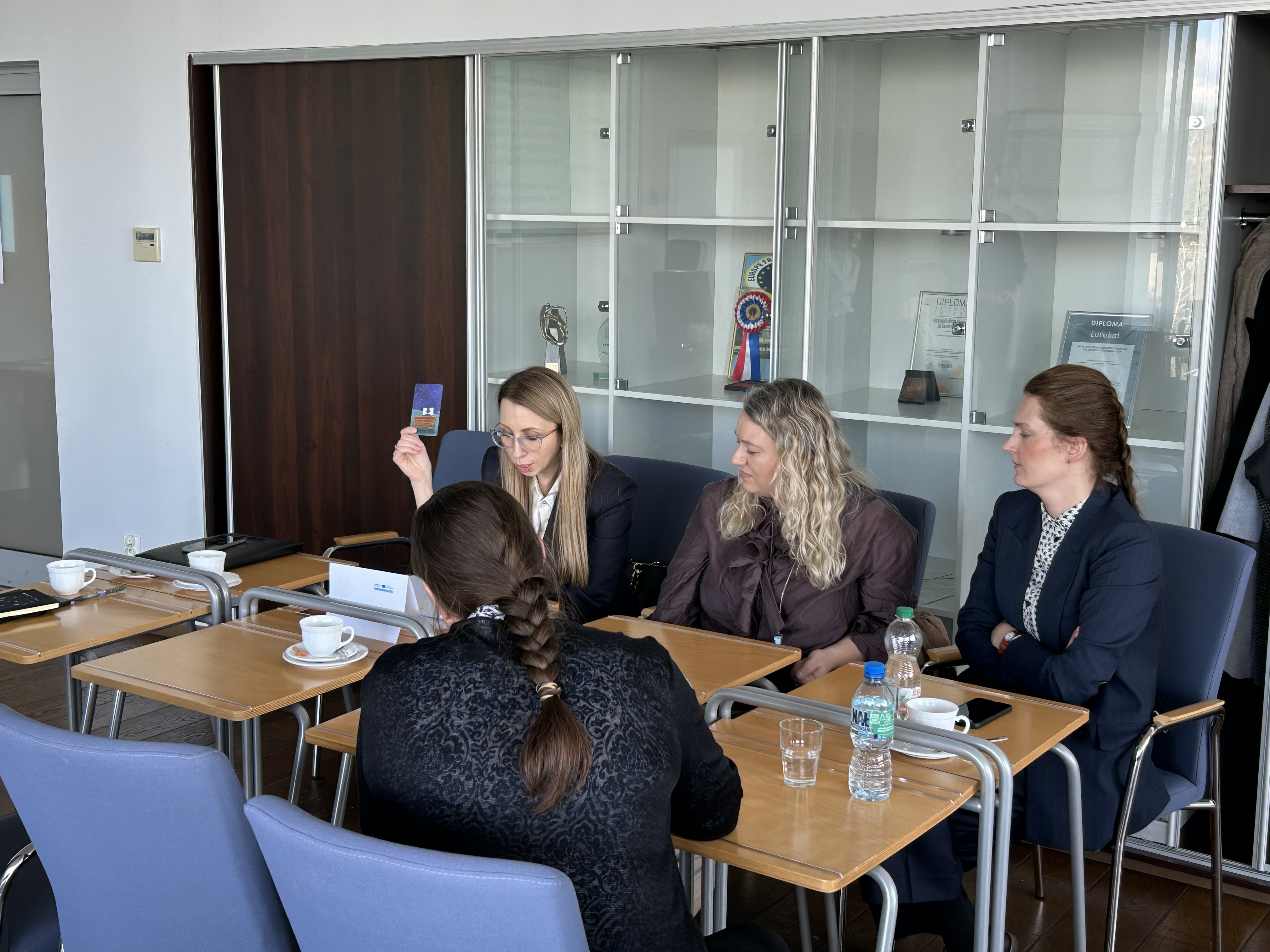
An important workshop component involved the use of metaphorical visual cards designed to map current challenges, define desirable future scenarios, and identify intervention pathways. The workshop process was based on a three-stage approach encompassing diagnosis of the current situation (“today”), envisioning the desired future (“tomorrow”), and designing pathways for change (“strategic bridge”). This method enabled participants to engage in deeper reflection on the socio-economic, environmental, and political-legal dimensions of regional transformation.
In the socio-economic dimension, participants highlighted the need to move away from a bureaucratic and fragmented governance model towards a more integrated, people-oriented innovation ecosystem. The diagnosis of the current situation pointed to excessive bureaucracy, lack of policy coherence, mismatch between strategies and available resources, and limited institutional capacity to respond effectively to transformation processes. At the same time, the envisioned future of the region was framed as a modern innovation “laboratory” built upon a strong R&D sector, practical implementation of research results, and the development of skills aligned with labour market needs. Among the key proposed actions were the simplification of administrative procedures, abandoning silo-based governance, strengthening coordinating institutions, and focusing on long-term strategic projects.
Environmental challenges related to the transformation of post-mining regions also constituted an important topic of discussion. Participants pointed to issues such as spatial planning chaos, insufficient coordination across administrative boundaries, low-emission problems, and the consequences of mining damage. At the same time, they emphasised the untapped potential of renewable energy sources and the need for stronger cooperation between science and industry in implementing innovative environmental solutions. Proposed directions for action included horizontal planning approaches, identification of transformation-related risks and potentials, and strengthening cross-sectoral cooperation.
The work of the Regional Stakeholder Group will continue during subsequent meetings, with the next session scheduled for the end of April 2026.
The EUMINDA project is co-funded by the European Union under the Interreg Europe programme (Project No. 03C0858)
Galeria