As part of the activities carried out during the next phase of the EUMINDA project, which focuses on peer learning - mutual learning among project partners, the exchange of knowledge and good practices, and exploring solutions implemented in different European countries – representatives of GIG-PIB participated in three international expert sessions. During two of these sessions, GIG-PIB representatives presented Polish experience and legal solutions relating to the mining transition process, while the third session focused on learning about Finnish experience in the systemic improvement of environmental permitting procedures supporting the energy transition.
Poland's Legal Framework for Mine Closure and the Management of Mining-Related Impacts
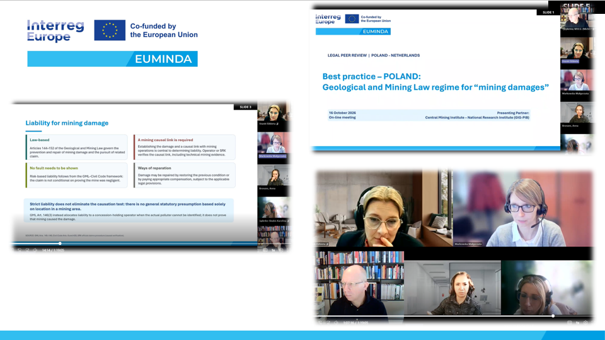
On 16 October 2026, representatives of GIG-PIB led a Peer Review Session for interested participants from the Netherlands. The meeting focused on the Polish legal framework governing the closure of mining facilities and the management of the consequences of mining activities.
The session covered the key provisions of the Geological and Mining Law of 9 June 2011 and the Act on the Functioning of Hard Coal Mining of 7 September 2007. Topics discussed included the obligations of mining enterprises related to mine closure, safety and environmental protection, the reclamation of post-mining areas, and liability for mining damage.
Particular attention was also given to the role of the Mine Restructuring Company (Spółka Restrukturyzacji Kopalń S.A. – SRK) as a specialised entity responsible for activities related to mine closure, the management of post-mining assets and selected consequences of restructuring the hard coal mining sector. The session also addressed amendments to the national legal framework that entered into force on 1 January 2026, introducing new possibilities for eligible mining enterprises to carry out mine closure themselves.
The Dutch partner showed particular interest in the provisions concerning the classification of mining impacts in mining areas and the associated mechanisms for damage prevention and remediation. These provisions form part of the system for managing the consequences of mining activities in areas undergoing transition.
Polish Experience in the Transformation of Mining Regions
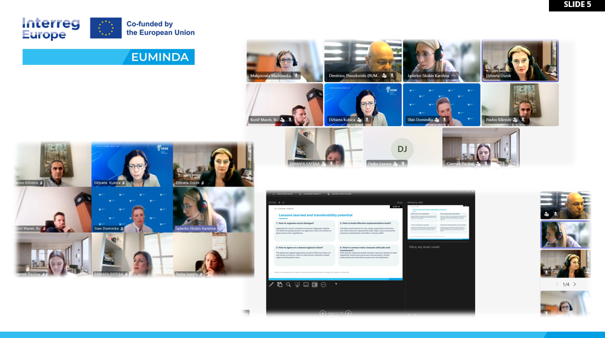
On 27 October 2026, another international Peer Review Session took place, focusing on the exchange of experience and good practices in the field of just transition in mining regions. The meeting brought together representatives from Poland, the Czech Republic and Greece, providing an opportunity to discuss solutions supporting the economic and social transformation of regions moving away from coal mining.
The session was once again led by the GIG-PIB team. Together with representatives of the Marshal's Office of the Silesian Voivodeship and Katowice Special Economic Zone S.A. (KSSE). GIG-PIB team presented the Silesian region's experience in planning and implementing the just transition process. One of the key topics was the Social Agreement (2021) concerning the transformation of the hard coal mining sector. The discussion also covered the role of regional authorities and instruments supporting new investments, job creation and the development of alternative economic sectors.
Partners from the Czech Republic and Greece were particularly interested in the social aspects of the transition, including residents' responses to the ongoing changes, initiatives aimed at skills development and workforce reskilling, and the scale of the projects being implemented. The role of Katowice Special Economic Zone S.A. was also an important topic, particularly its combination of investment support instruments with educational and development initiatives supporting the region's transition.
Finnish Solutions for Permitting Procedures for Energy Transition Projects
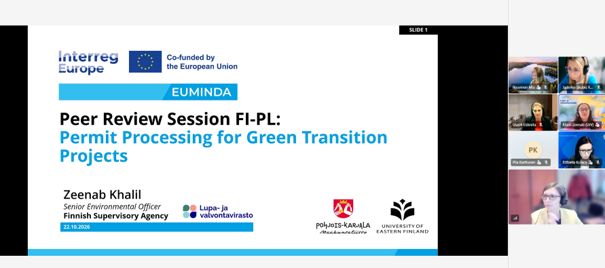
On 22 October 2026, representatives of the Institute also participated in a meeting during which Finnish partners presented changes to permitting procedures for projects supporting the green transition. The solutions discussed included the establishment of a single authority responsible for coordinating the administrative process and the introduction of an accelerated permitting pathway for projects of strategic importance.
A particularly interesting solution was the system for monitoring the time required to obtain administrative decisions. This system increases the transparency and predictability of the investment process, thereby reducing investment risks and supporting the faster implementation of projects that are key to economic development and the transition. At the same time, it was noted that implementing similar mechanisms would require amendments to the existing legal framework.
The EUMINDA project is being implemented under the Interreg Europe Programme.
Galeria